VN Engineering
Engineering studies on the plant as it is actually built.
Feasibility, baselines, verification and readiness for regulated manufacturers, from the budget lines a project engineer already holds.
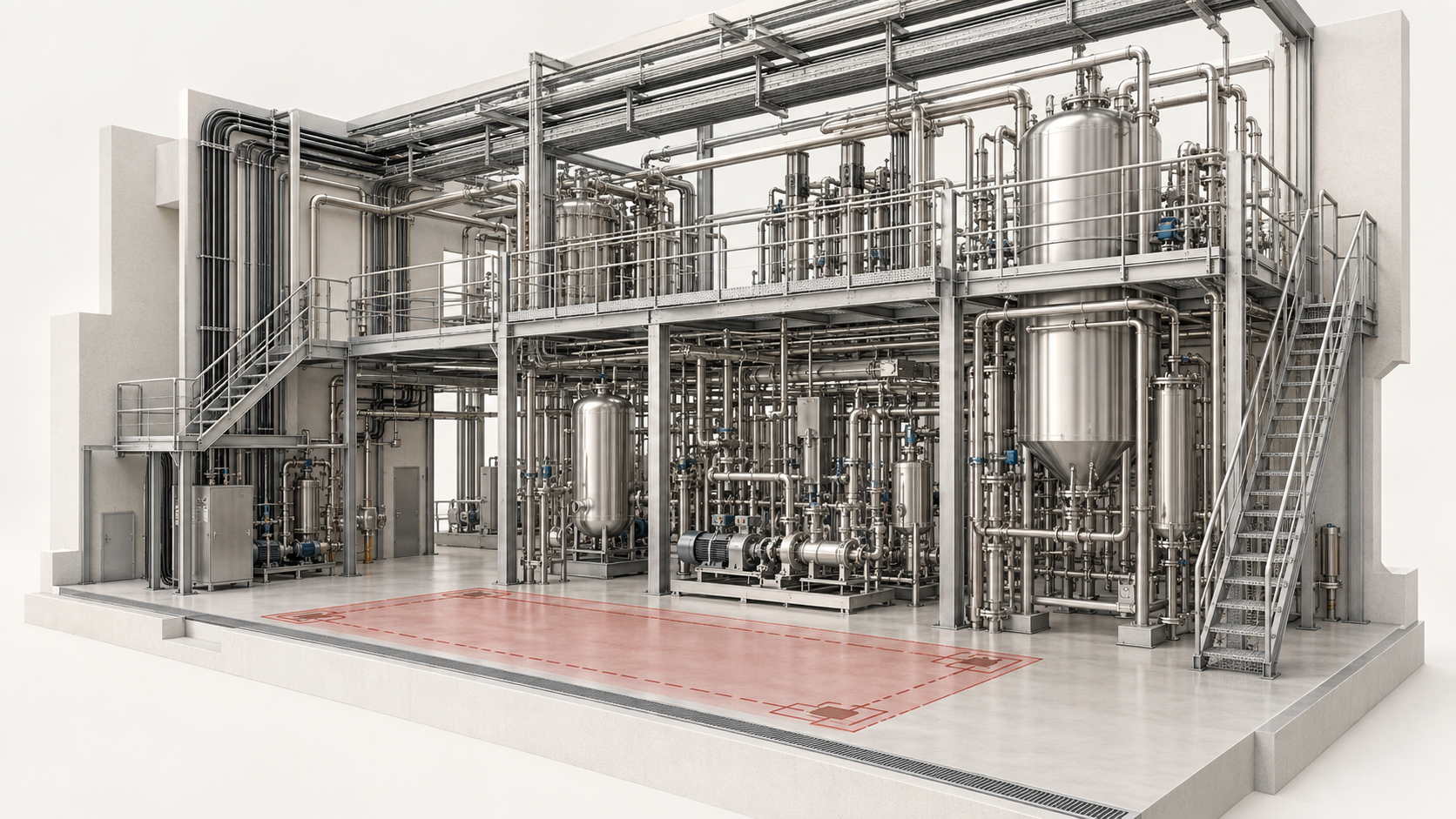
Can this equipment fit here?
A fixed scope, a fixed price and a committed turnaround for one placement.
Our engineer walks the bay with the capture kit and checks footprint, clearance, access and utilities against what is installed. The drawing is checked too, and where it disagrees with the bay, the disagreement goes into the verdict. This replaces a phone call to the framework partner and an eyeballed answer, at a price below any call-off minimum.
When the question is bigger than one bay, it becomes a feasibility study on the same site model, and the walk has already been done.
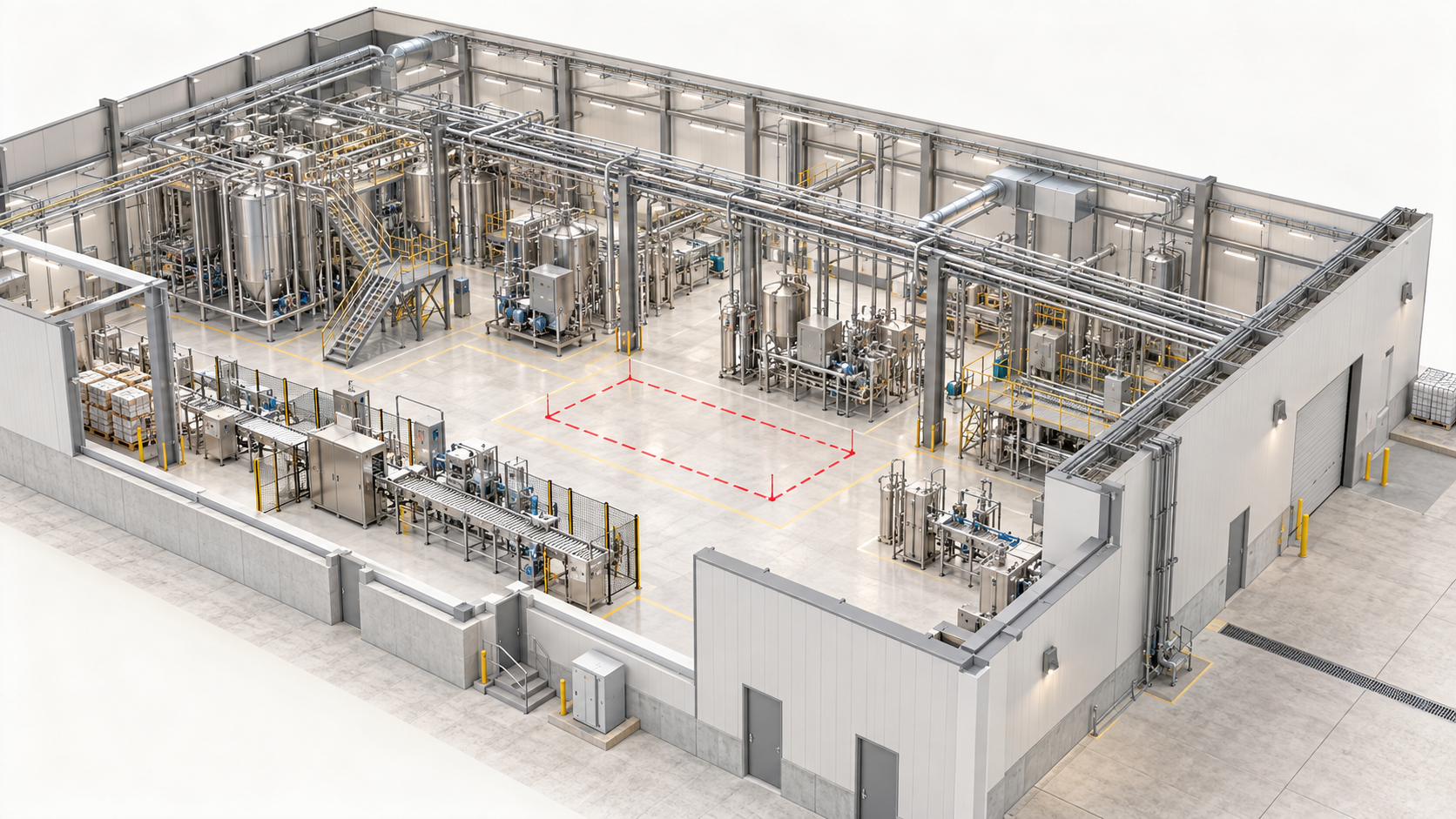
Named by the stage your project is in.
Engineering budgets are organised by lifecycle stage, so the deliverables are too. Each one is a thing you receive, with its scope stated.
Front end
Change and installation feasibility
Can this change or this equipment go into the plant that exists, within the shutdown window? You receive a verdict, the evidence and discrepancy registers, the constraints, a preliminary layout on the site model, utility and access requirements, and an outline of validation and EHS impact. At FEL-2 the scope package and a class-4 estimate are added.
Decision support to FEL-2. Detailed design and stamped work stay with the appointed teams.
Pre-tender existing conditions
Brownfield baseline package
SyntaGraph attached to the project. The existing conditions and constraints the EPCM bids against, the factory model on an exportable stage, the discrepancy register, and evidence-backed boundary conditions the designers can compute against. The project manager buys it from the existing-conditions budget. On a site with a live capex project, this is the first purchase.
The package feeds the EPCM before award. We do not work inside an awarded EPCM project.
Handover and close-out
As-built verification
The EPCM's as-builts checked against the plant before acceptance. You receive the reconciled documented-versus-observed state with graded confidence, and the discrepancy register the site would otherwise carry for years.
This checks the handover. Construction, commissioning and qualification execution stay with their contractors.
Operations support and change control
Works overview and change-control assessment
Every project, change, maintenance task and shutdown placed on the site model, located and dated, with its evidence attached. Conflicts between works in space, access, laydown or utility isolation are found before the window. For a change control, the engineering, validation and EHS sections are drafted from the evidence base and the project engineer signs.
This instruments the in-house engineer, who still signs. It is not a project management tool.
Shutdown and turnaround
Turnaround readiness
Scope, access, utilities, evidence and permits checked against the site before the window, with conflicts across the turnaround scope detected. You receive a readiness view the planner can work from.
The readiness view feeds the turnaround planner. We do not execute the turnaround.
Asset acquisition and development
Manufacturing due diligence
Capability, capacity and condition of a site or a supplier, evidenced from a walk, under a deal timeline. You receive an assessment that says what the site can do, what it cannot, and what was not demonstrated.
The assessment is decision input. Transaction, design and statutory liability stay where they are.
Also delivered as scope
- Tech-transfer feasibility. Receiving-site fit, utilities, room class, equipment and evidence gaps, with a readiness date and its confidence.
- Evidence-gap study. The decision-critical unknowns before a decision, what each would change, and what each costs to close.
- Scenario exploration. Layouts, shutdown sequences and phasing compared on one evidenced baseline, with predictions committed before execution.
- Drift monitoring. Scheduled re-observation of a modelled site, so the next study starts from a current record.
- Decommissioning and relocation. The feasibility study in reverse: what is connected, what is shared, what breaks, in what order.
- Site package for the equipment supplier. With your permission, the OEM does its layout work on the site model, which saves it a site visit and the assumptions that follow one.
The verdict carries the air, the heat and the utilities around the change.
Where the question needs it, the study screens thermal, airflow and utility-capacity constraints for the proposed placement and shows hotspots, violations and affected zones on the site model, with the assumptions and evidence gaps listed. A screened result can be verified on request: a named deterministic case on the shortlisted option, priced per case, identified before it runs.
After the change we measure, and the record keeps the difference between what was predicted and what was measured. A result from a learned model is labelled predicted, because nothing has been calculated until a solver has run. Process and product physics are out of scope, and each proposal says so.
The physics capability is being built. Until the first study needs it, proposals state which questions are answered by declared hand calculation and which are Not Demonstrated.
A calculator with a declared method and validity range, or a learned model inside the domain it was validated on, with the uncertainty shown.
A named deterministic solver on a named case, with residual checks and a recommendation on what to verify next.
Read on the installed plant after the change, and compared with what was predicted.
Reviewed and approved by the engineer of record wherever professional accountability requires it.
How a study runs.
Frame
Name the decision, its boundary, its owner and the minimum evidence it needs. The proposal fixes scope, price and turnaround.
Walk and capture
Our engineer walks the site with the capture kit and collects the records that bear on the question. The walk is how we learn the site.
Reconcile
Documented and observed states are kept apart. Contradictions and decision-critical gaps come out first, as the discrepancy register.
Decide
The verdict, the register, the package or the readiness date, with the evidence and conditions attached. The engineer of record signs.
Re-observe
After the change we come back and record what happened against what was predicted. The re-observation is priced into every proposal.
Terms.
What a project engineer asks before the first proposal.
How is a study priced?
A fixed price against a defined scope, with a committed turnaround. Our target is about 30 percent below the equivalent study the site already buys on a first site, and up to 50 percent below for a repeat question on a site we have already modelled. These are targets. No customer saving has been measured yet, and the comparison is written into each proposal.
Where does VN sit relative to the EPCM?
Before the award, below its threshold, or after handover, and never inside an awarded EPCM project. The baseline is the owner's own evidence, which is why it is not subcontracted through the EPCM.
Who signs the engineering decision?
The engineer of record stays. Today that is the site's engineer, and we make the evidence they sign on. Design on the verified plant, the next rung, comes with our own engineer of record.
What happens to our data?
Your data trains nothing without a permission you negotiated. Sources, rights and any reuse are written into the study. You keep your systems of record, and the site model exports in an open format.
What if the evidence is not there?
The verdict says Not Demonstrated and names the evidence that would close the gap, with the re-observation or review needed to get it. We treat that as a result of the study and price it as one.
Tell us about the project.
Send the question and the stage it is at, whether it is a placement, a feasibility question, a tender package, a handover or a turnaround.