VN SyntaGraph

The site model every study starts from.

SyntaGraph holds what is installed, what the records say and what is proposed, each with its source, on a stage you can export.

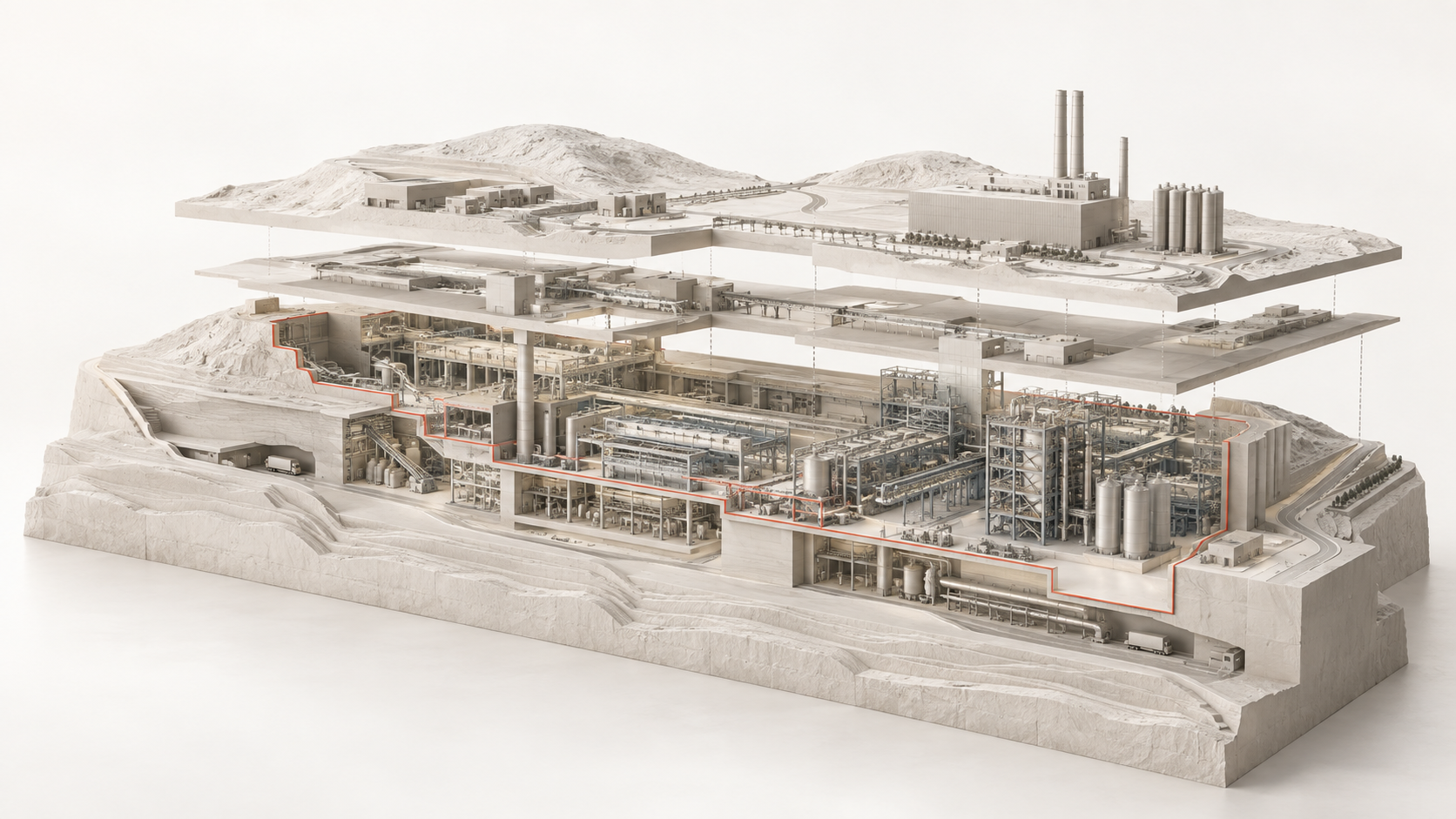
A sectioned model of a manufacturing campus with the terrain, the buildings and the process levels lifted apart, one area outlined in red

One model of the site. Three readings, kept apart.

Where the readings disagree, the disagreement is the finding. The discrepancy register is the first deliverable of every capture. Below, a campus in three views: the technical model, the observed state, and what is connected to what.

Observed

What our engineer found on the walk. Scans, photographs and measurements, attached to the room, asset, route or utility they describe, with the date they were taken.

Documented

What the records say. Drawings, exports, registers and local knowledge, each with its source, its revision and a confidence grade, kept separate from what was observed.

Proposed

The change under evaluation, kept distinct from the current state so constraints, dependencies and evidence gaps can be reviewed against it before anything is approved.

Technical model

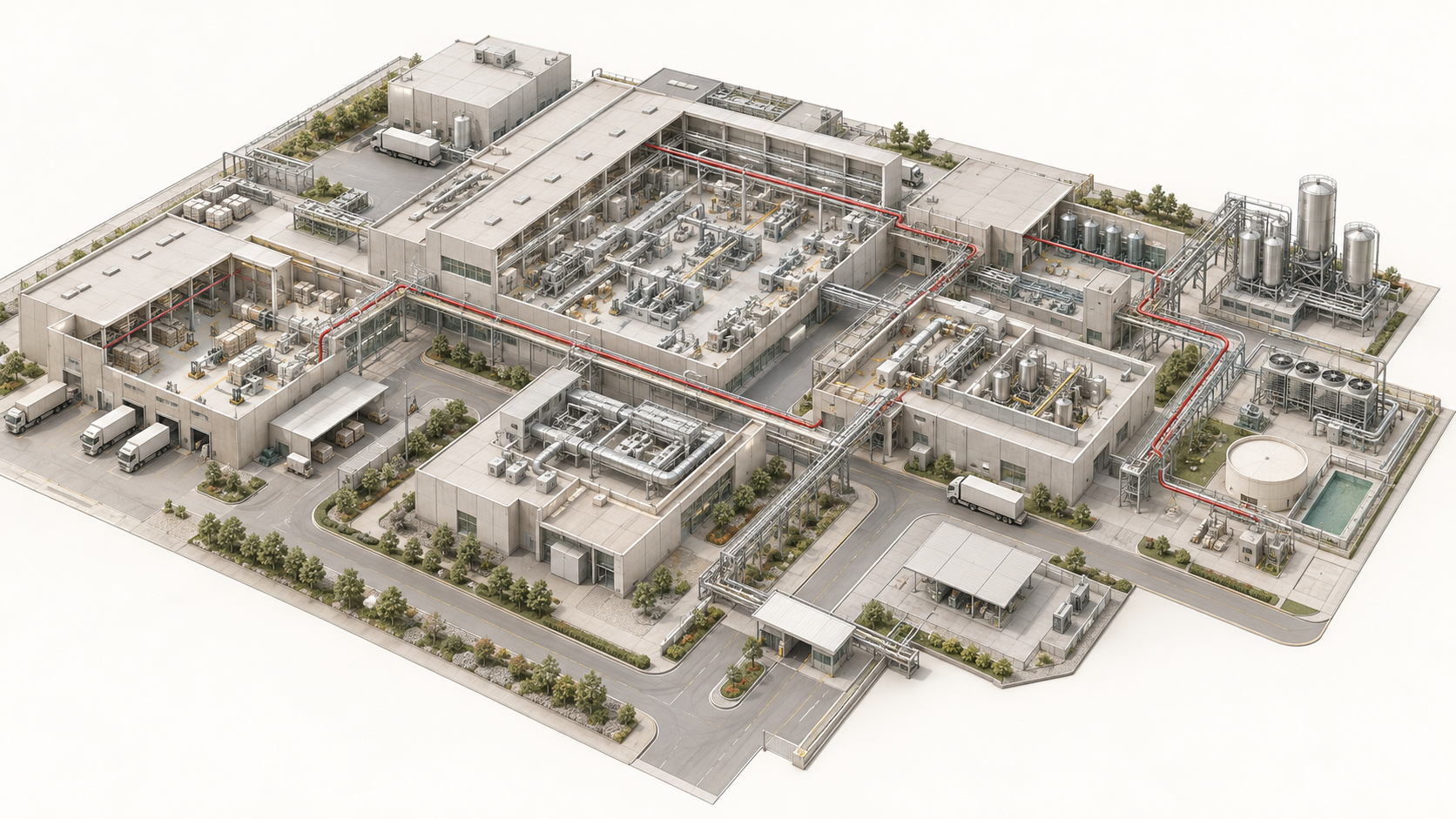
A campus modelled in code after our reference image, so it is a model and not a capture. Drag to turn it.

On a capex project, it is bought as a project deliverable.

A new line or building in its front end already has a budget line for existing conditions, survey and site data. SyntaGraph is bought from that line.

The project manager buys the evidenced site model, the factory model and the discrepancy register as a deliverable on a portable stage, with no licence and no seat to pay for. The EPCM bids against it. With your permission, the equipment supplier lays out against it. Once we are an onboarded vendor on the project, the engineering studies follow as change orders instead of new tenders.

You can start with the model alone. We prefer a study beside it, because a verdict is what earns the reuse rights and closes the record. It is your choice which deliverable comes first.

What the package contains

The site model
Observed and documented states of the site on an exportable OpenUSD stage, reconciled and graded.
The discrepancy register
Where the drawings, the systems and the plant disagree, with the evidence for each line.
Boundary conditions
Loads, flows, room classes and utility headroom with their sources, ready for the EPCM's designers to compute against.
The evidence index
Every source, its date, its confidence and what it supports.
A manufacturing campus drawn from above with roofs removed, a red utility route running between the buildings

The plant you can ask what happens if.

A proposed change is compiled into a physics problem from the site model: the installed geometry, the loads, the flows, the operating mode and the acceptance criteria, each input with its evidence. A router sends it to the cheapest engine that can answer it. A trust check decides whether the model was allowed to answer at all. An engineer signs. After the change, we measure.

  1. The question

    Will this line create a hotspot in the bay. Will the extract hold the pressure cascade. Is the utility headroom really there.

  2. The problem package

    Geometry, loads, flows, operating mode and acceptance criteria assembled from the model. Where an input is missing, the package flags it as a decision-blocking unknown and leaves it empty.

  3. The router

    A transparent calculator with a validity range, a learned model inside its validated domain, or open CFD and your own licensed CAE for the cases that matter.

  4. The trust check

    Applicability, conservation residuals and the margin to the requirement. Out of domain is Not Demonstrated. Close to a limit is escalated.

  5. The result

    Labelled screened, verified, measured or signed. A result from a learned model is labelled predicted until a solver has verified it. The exact snapshot, assumptions and engine version stay with it.

We write no solver. We adapt open CFD and NVIDIA's PhysicsNeMo framework, and we use the customer's own CAE licences where they hold them. What we own is the step every solver assumes away: knowing what to simulate, on the plant as it is installed.

What your product does inside the machine is process physics. It stays with your process engineer, and every proposal that touches a product-contact change says so.

The first domain is heating, ventilation, thermal and airflow for line bays, packaging spaces and equipment rooms. Utility networks follow, each domain only after the previous one has closed a predicted-versus-measured loop on a real site. It is being built, and the first study that needs it sets the date.

How the model is built.

  1. Capture

    Our engineers walk the site with a rapid-imaging kit, and the capture becomes a 3D stage of the site as it is. We rent the capture technology and do the walk ourselves.

  2. Graph

    Records and observations are linked to the place they describe: the room, the asset, the route, the utility. Contradictions stay visible.

  3. Stage

    Current and proposed layouts on an OpenUSD stage. It is portable and exportable, and it is the surface the physics layer computes on.

  4. Decision case

    The verdict with its evidence, the discrepancy register and the conditions that remain. Not Demonstrated is a legitimate result.

The capabilities, shown.

Four views of the same site model. Switch the state to see what each layer holds.

01 / Model

Connected site model

What exists, where it is and how it is connected. The technical model holds geometry and engineering data. RealView holds the captured, observed state. The connected layer attaches utilities, operations and asset data to both. Every question that follows starts from this shared context, so nothing has to be reconstructed from scratch.

02 / Registration

Reality registration

Is the documentation true? The engineering model is registered against the capture in one coordinate frame. Where the model and the plant differ, the difference is kept as data: anchor points, deviation values and capture provenance. That divergence is often the decision-relevant fact, so it stays as evidence.

03 / Analysis

Placement and clearance

Can this machine go in that bay? The proposed equipment is checked against observed geometry, utility capacity, access routes and engineering constraints. The result is itemised: conflicts, open conditions and verified connections. It is the basis of an engineering decision, not a picture of a fit.

04 / Field

On the floor

What changed since the last capture? The same model is available where the work happens. A field observation is captured on site, placed where it was seen, and linked to the asset, route or line it affects. An obstruction in the hall becomes evidence with a photo, a position and a time.

What stays with you.

Does SyntaGraph replace our systems of record?

No. It reads them, places their contents against the site, and keeps their source. Your drawing management, maintenance and quality systems stay where they are and stay authoritative for what they hold.

Who owns the model and the data?

The site model is delivered to you as a project deliverable. Your geometry, loads, measurements and records train nothing without a permission you negotiated. Any reuse is a separate, written agreement.

Can we leave?

Yes. The stage exports in an open format and the registers are yours. Our job is to make leaving economically irrational, because every later question on the site starts from a record that already exists.

Is this a digital twin?

We do not use the term. SyntaGraph is the evidenced state of the site with the disagreements kept visible, built to answer engineering questions. It is priced and delivered as a project deliverable, and we do not sell it as a platform.

Attach it to the project.

For project managers with a line or a building in the front end, and for project engineers with a question about the plant that exists.